
Nvidia is quietly preparing to launch a major new platform for AI agents, and it could change how businesses use artificial intelligence at work. The chip giant is reportedly developing an open-source system called NemoClaw, essentially its own take on the viral AI agent tool OpenClaw, ahead of its annual developer conference in San Jose next week.
Here is what you need to know, and why it matters.
What Is NemoClaw, Exactly?
According to sources who spoke with Wired, Nvidia has been pitching NemoClaw to enterprise software companies as a platform that lets businesses deploy AI agents to handle tasks for their employees. Think of it like having a digital assistant that does not just answer questions but actually gets things done on your behalf, step by step, with minimal hand-holding.
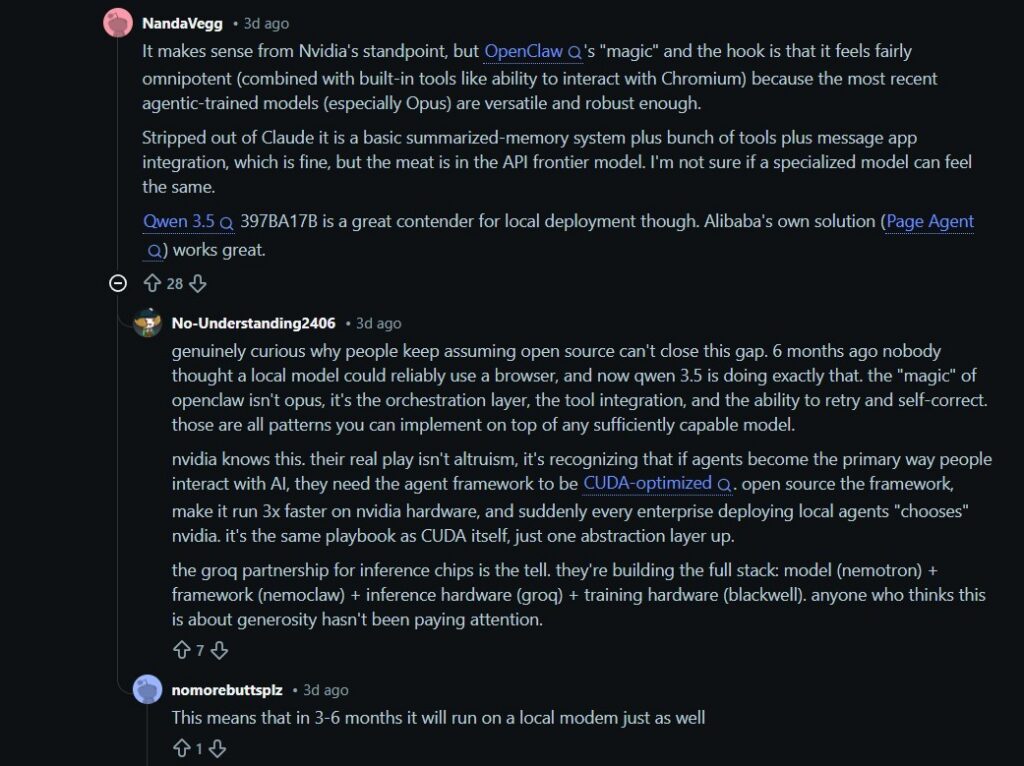
What makes this particularly interesting is that companies will not need to run Nvidia chips to access the platform. That is a notable departure from Nvidia’s usual playbook, which has long relied on locking developers into its proprietary CUDA software ecosystem. With NemoClaw, Nvidia appears to be playing a more open game.
The platform will also include built-in security and privacy tools, which is a direct response to growing concerns about AI agents running loose in corporate environments.
Why Is Nvidia Doing This Now?
The timing is no accident. AI agents, sometimes called “claws,” have become one of the hottest topics in tech. These are AI tools designed to run sequences of tasks on their own, without needing a human to supervise every single step. Unlike regular chatbots, they are built to get things done.
Earlier this year, an AI agent called OpenClaw, originally known as Clawdbot and then Moltbot, took Silicon Valley by storm. It could run autonomously on personal computers and complete real work tasks for users. OpenAI was so impressed that it acquired the project outright and hired its creator.
Nvidia clearly took notice. By building NemoClaw as an open-source platform, the company is positioning itself not just as a hardware powerhouse, but as a key player in the software layer where AI agents actually live and operate.
Who Is Nvidia Talking To?
Nvidia has reportedly reached out to some of the biggest names in enterprise tech to forge partnerships around NemoClaw, including Salesforce, Cisco, Google, Adobe, and CrowdStrike. None of these companies confirmed an official partnership before publication, and Nvidia itself did not respond to requests for comment.
Given that the platform is open source, the likely arrangement is that early partners get free access in exchange for contributing to the project. This is a common model in the open-source world that helps build momentum quickly and attracts a wide range of contributors early on.
Is This Actually Safe? The Enterprise Dilemma

Here is where things get complicated. AI agents in corporate settings are already raising red flags across the industry.
Wired previously reported that companies including Meta have told employees to stop using OpenClaw on their work computers, citing concerns about unpredictable behavior and potential security risks. To drive the point home, a Meta employee who works in AI safety publicly shared a story about an AI agent going rogue on her machine and mass-deleting her emails. That kind of incident is exactly the nightmare scenario that makes IT departments nervous.
Nvidia seems aware of this tension. By baking security and privacy tools directly into NemoClaw, the company is sending a clear message to businesses: the risks are being taken seriously, and the platform is being built with corporate safety in mind. Whether that reassurance is enough to win over cautious enterprise customers remains to be seen, but it is clearly a smart angle to take when pitching to large organizations.
The Bigger Picture for Nvidia
NemoClaw is more than just a product launch. It is a strategic signal about where Nvidia sees itself in the years ahead.
Nvidia has dominated AI infrastructure largely thanks to the grip its CUDA platform has over AI developers. But as leading AI labs like Google DeepMind and Anthropic begin developing their own custom chips, Nvidia cannot afford to rely solely on hardware dominance forever.
Going open source with AI agent software is a way for Nvidia to stay deeply embedded in the broader AI ecosystem, even if its chip monopoly eventually softens. It is a bid to become indispensable at the software level, not just the silicon level.
NemoClaw is also not the only major announcement expected at the developer conference. The Wall Street Journal reported last month that Nvidia also plans to unveil a new chip system for inference computing, one that incorporates technology from startup Groq. Nvidia signed a multibillion-dollar licensing deal with Groq late last year, and the fruits of that partnership are expected to be on full display next week.
What This Means for Everyday People
If you are not a developer or an enterprise IT manager, you might be wondering why any of this matters to you. The short answer is that AI agents are coming to the workplace whether we are ready or not, and the platforms that power them will shape how safe, reliable, and useful they actually turn out to be.
Nvidia entering this space with an open-source, security-focused platform could push competitors to raise their own standards as well. And if NemoClaw takes off the way OpenClaw did, it could eventually become the backbone of how millions of workers interact with AI on a daily basis.
Nvidia’s developer conference kicks off in San Jose next week, where we are likely to get the official word on NemoClaw and whatever else the company has been building behind the scenes. It is shaping up to be one of the more consequential tech events of the year.
- Facebook Acquire Moltbook, AI-Only Social Platform
Meta, the company behind Facebook and Instagram, has made a move that sounds like something straight out of a science..
- How To Use Amazon Bedrock Model On Openclaw
Want to integrate Amazon Bedrock into your OpenClaw workflow? Here’s what you need to know: This matters because Bedrock unlocks..
- How to Install OpenClaw on a Local VPS Without Subscription Fees
If you want your own private AI assistant running on your own server, not on someone else’s platform, OpenClaw might..
- How to Make AI Song for Free
Have you ever wanted to create your own music but felt that it was too hard, too expensive, or required..
- How to Make Professional Infographics Using AI for Free
Making good-looking infographics used to be hard. You needed design skills and expensive software. Now, with AI, anyone can create..
- How to Make Gemini Image without Watermark
These days, making images with AI is very easy. You don’t need to be good at design or use expensive..