
GDevelop is a no-code open-source game engine for creating 2D, 3D, and multiplayer games across mobile, desktop, and web platforms. It replaces the need for complex coding knowledge with an intuitive event-based visual interface. The engine includes built-in AI assistance and exports to multiple platforms without licensing fees.
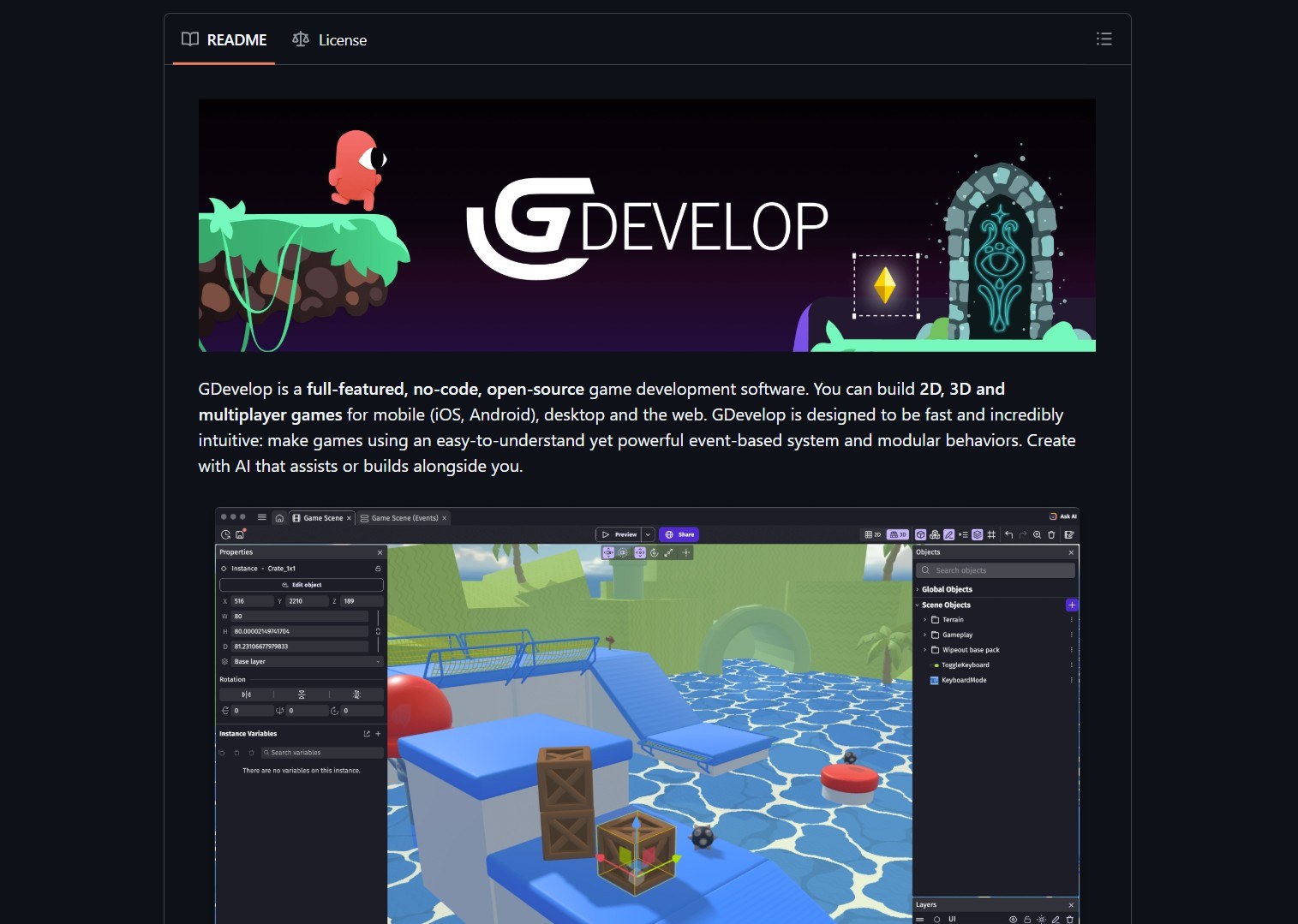
GDevelop targets beginners and creators without programming experience. It solves the complexity of traditional game engines by providing a visual event system. You can design game logic using drag-and-drop actions and conditions. The engine supports physics engines like Box2D and Jolt for 3D simulations. All games are distributed under the MIT license with no royalties.
Project Repository
Project link:
https://gdevelop.io/
GitHub repository:
https://github.com/4ian/GDevelop
How to Deploy & How It Works
GDevelop consists of several modular components. The Core defines game structure and IDE tools. GDJS is the game engine written in TypeScript using PixiJS and Three.js for rendering. GDevelop.js provides JavaScript bindings with WebAssembly for the IDE. The newIDE editor is built with React, Electron, PixiJS, and Three.js.
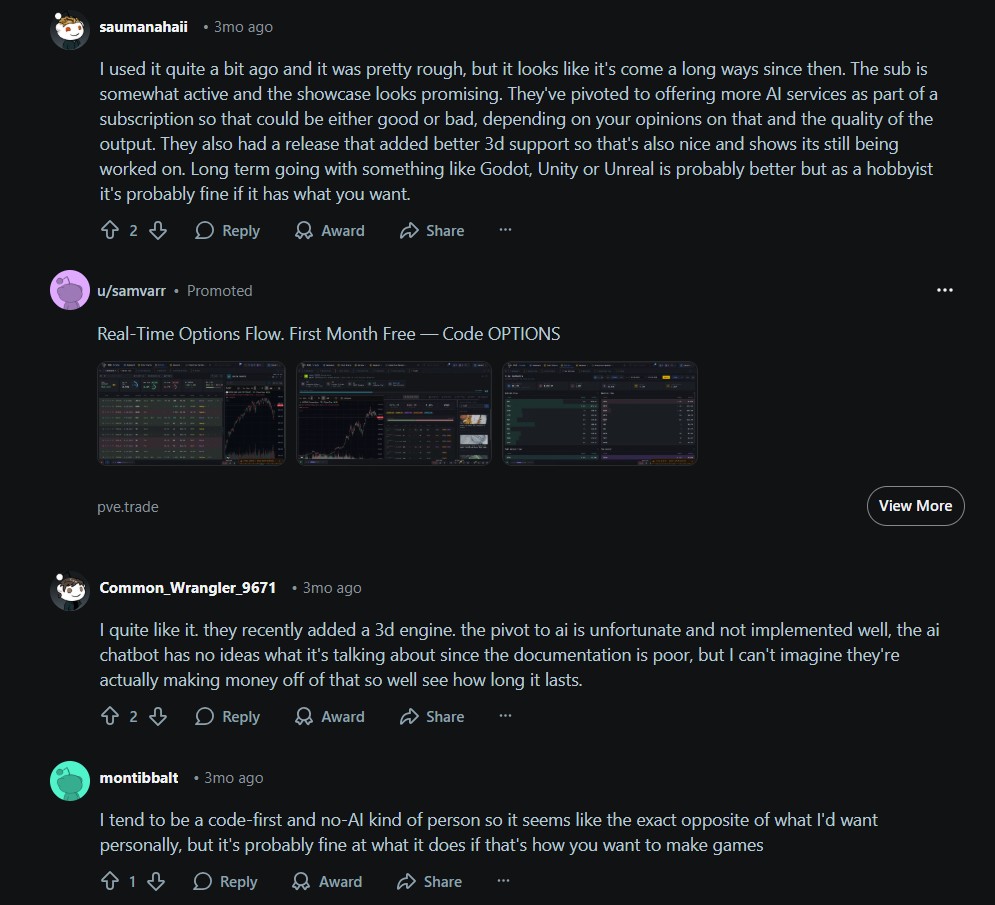
To start creating games, download the desktop editor from the official website. Alternatively, use the web version directly in your browser. The interface divides into scenes, objects, behaviors, and events. You can test games instantly with the built-in preview. Export to platforms requires clicking the publish button and following platform-specific guides.
- Download GDevelop from gdevelop.io or clone the GitHub repository.
- Install dependencies using npm install if building from source.
- Launch the editor and create a new project with a template.
- Add objects to scenes and attach behaviors via the properties panel.
- Define game logic using the event sheet with conditions and actions.
- Test your game with the preview window and debug as needed.
- Export to your target platform using the publish menu options.
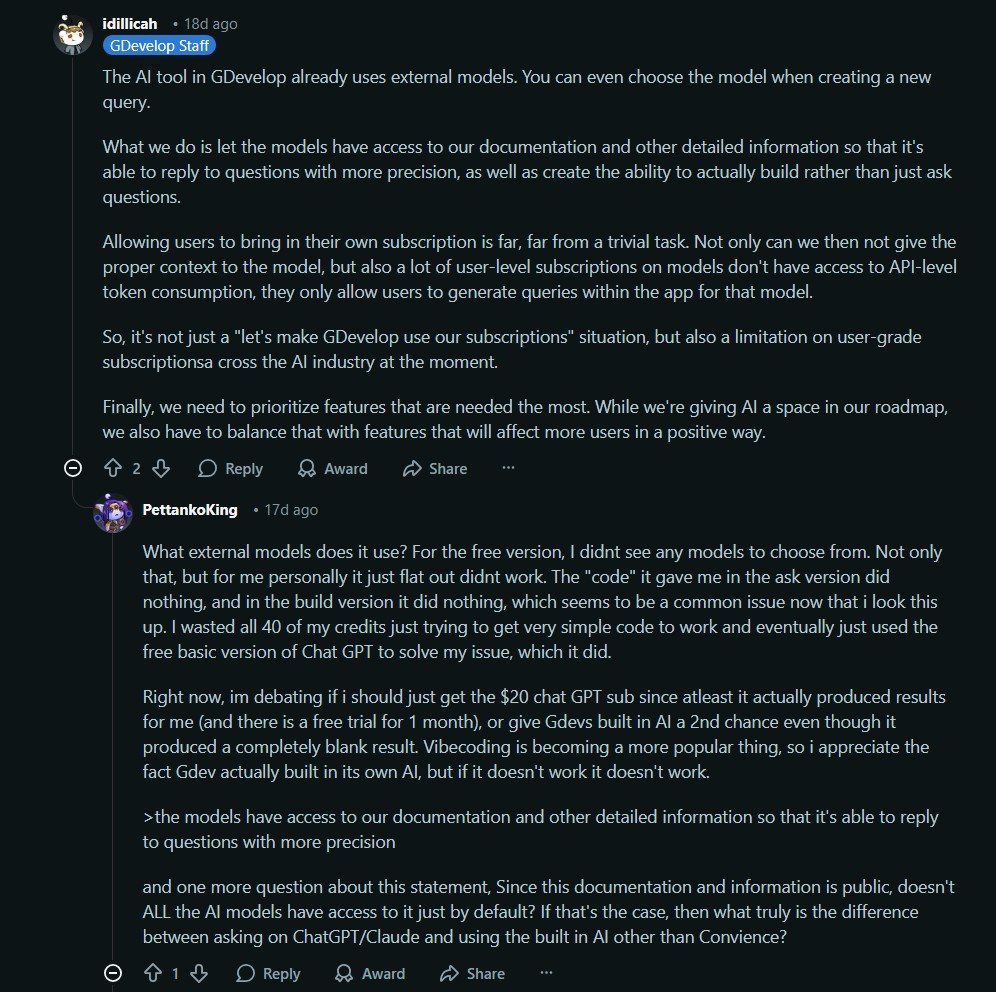
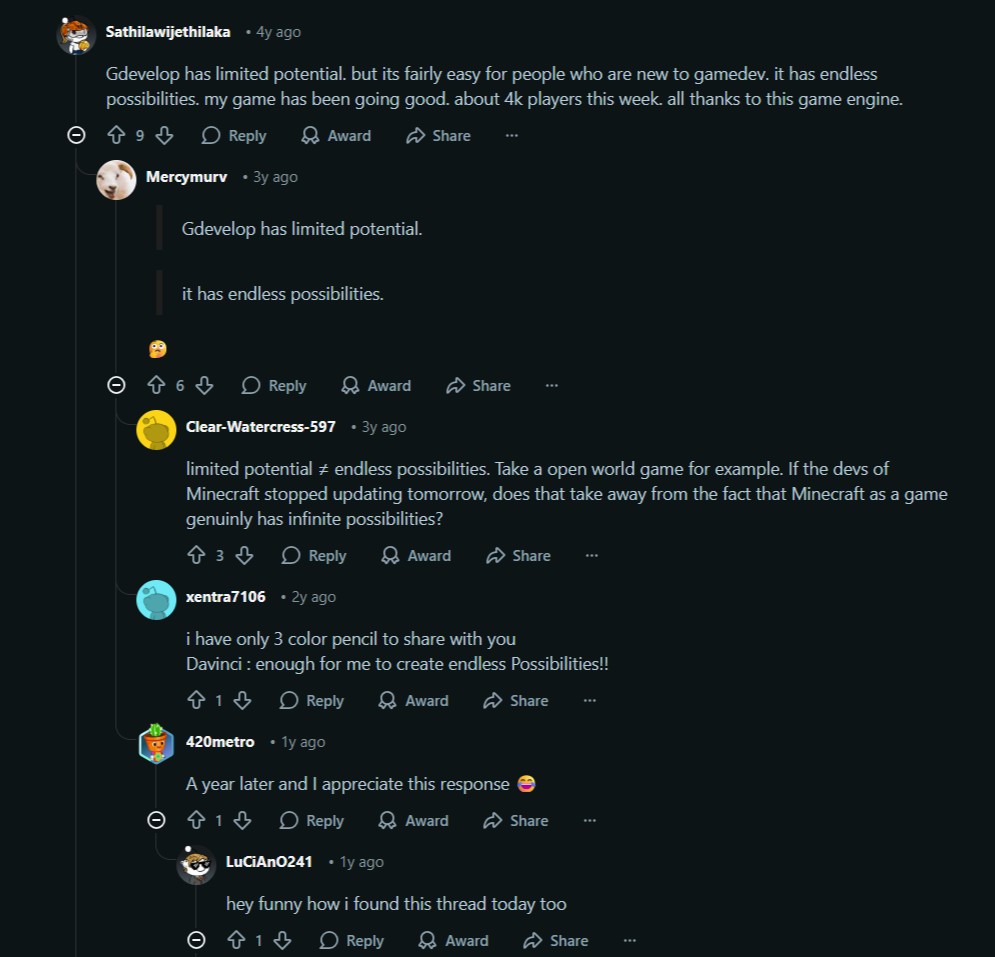
Community feedback highlights both strengths and limitations. Users appreciate the intuitive interface and rapid prototyping capabilities. Some note that the built-in AI assistant leverages external models similar to the real-time communication in Claude Peers MCP. The recent addition of 3D support shows active development. Long-term viability compared to Godot or Unity depends on your project scope.
The Verdict / The Catch
GDevelop democratizes game development by removing the coding barrier. It excels at 2D games and simple 3D projects with its visual workflow. The engine is ideal for education, prototyping, and indie developers who prioritize speed over deep customization.
The catch lies in advanced use cases. Complex game mechanics may require custom extensions written in JavaScript. Performance optimization for large-scale games is less fine-tuned than professional engines. The AI features are still evolving and may not replace manual design entirely. The modular architecture follows patterns seen in Claw Code.
- How to Create Custom City Map Posters with MapToPoster
MapToPoster is a lightweight generator that renders minimalist city maps from any location you type, adds stylized text and coordinates,..