
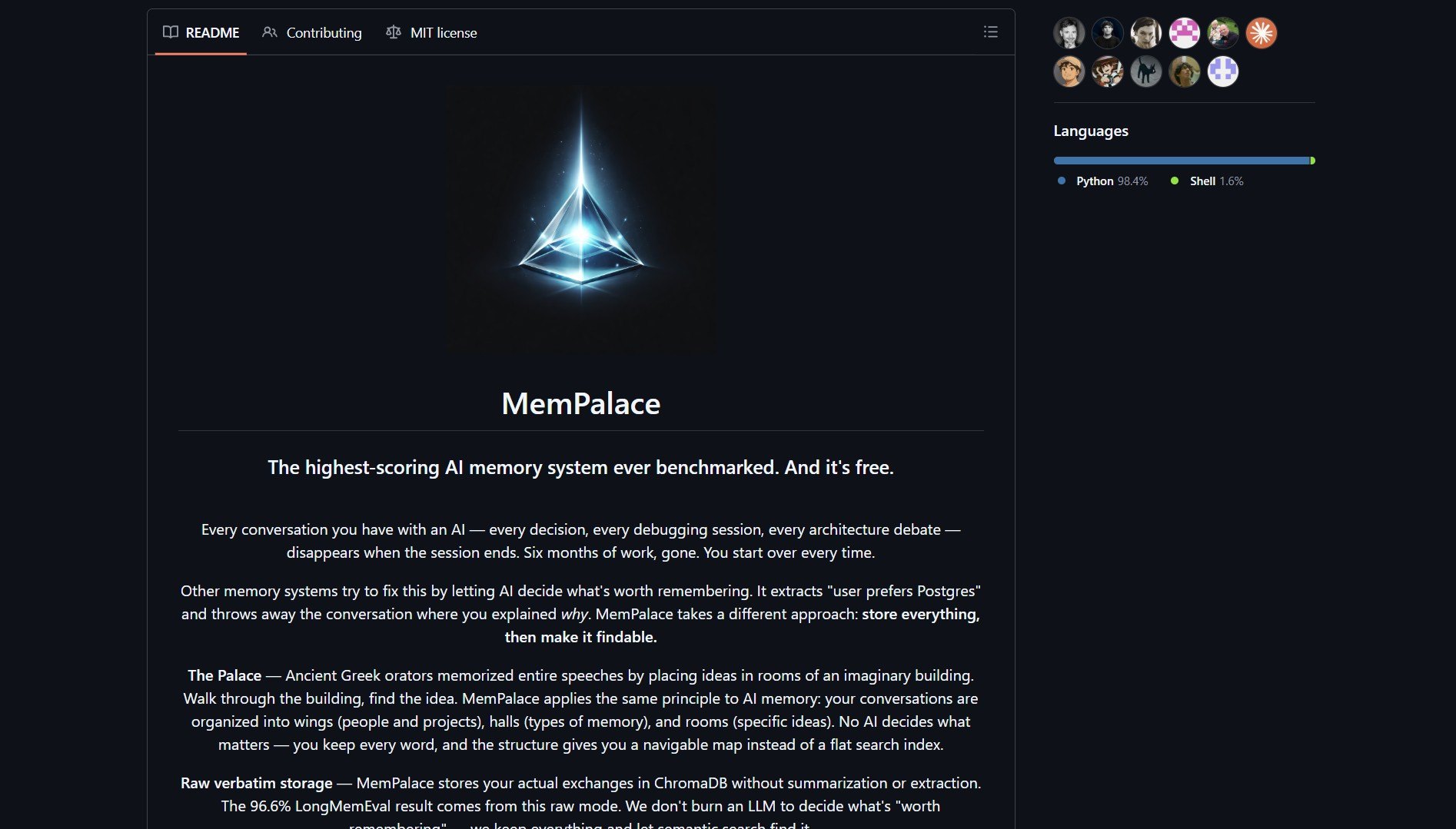
MemPalace is an open-source memory architecture for AI systems that organizes long-term context using spatial geometries inspired by the ancient Greek Method of Loci. Instead of scattering embeddings across an opaque vector store, it maps conversations into a spatial hierarchy called Wings, Halls, and Rooms. A custom compression algorithm called AAAK condenses months of interaction into a tiny token footprint while preserving semantic meaning.
Customer Persona
Developers and heavy AI users who need persistent context across long interactions will find MemPalace useful. It targets agent builders who want explicit memory placement and retrieval, rather than relying on opaque vector databases. General users looking for a simple chat UI tweak should look elsewhere.
Project Repository
Project link:
https://github.com/milla-jovovich/mempalace
How It Works
MemPalace extracts semantic features from dialogues, indexes them into a spatial graph, then applies AAAK compression to reduce token cost. The result is months of interaction represented in a tiny token footprint but still searchable and semantically faithful.
- Clone the repository: git clone https://github.com/milla-jovovich/mempalace
- Read the README for setup and examples.
- Configure Wings for high-level subject partitioning.
- Organize Halls within Wings for theme scoping.
- Place conversation entries into Rooms as searchable nodes.
Market Analysis
Most AI memory systems rely on vector databases with embedded chunks. MemPalace takes a spatial approach that makes retrieval explicit. This mirrors the trend in agent frameworks like LangChain and LangGraph, where structure and explicitness improve debuggability. AAAK compression targets token cost reduction, a key concern for production deployments.
Advertising Section
For production AI deployments requiring persistent memory, consider managed context platforms that handle compression, retrieval ranking, and cost optimization at scale. These services layer enterprise reliability on top of raw memory implementations.
The Verdict / The Catch
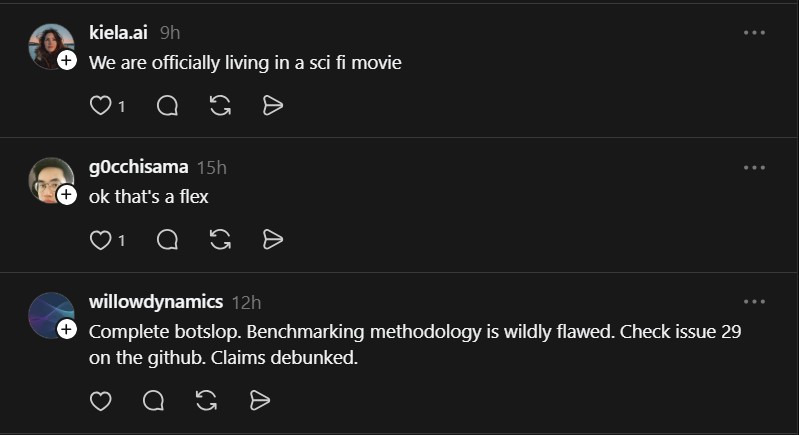
MemPalace treats memory as structure, not just indexing. The spatial hierarchy gives clear affordances for retrieval and debugging. AAAK compression is promising for token savings, but community benchmarking has raised methodology questions. Replicate exact data preprocessing before drawing conclusions from published benchmarks.
- How to Build AI Apps with Genkit and Firebase Studio
Badge Genkit is the open-source framework that powers Firebase Studio, and it provides SDKs for JS/TS, Go, and an alpha..
- How to Harden AI Agent Runtimes with NVIDIA NemoClaw
NemoClaw is an early preview reference stack from NVIDIA that wraps an agent runtime with guided onboarding, a hardened blueprint,..
- How to Connect AI Agents to Google Workspace
Google Workspace CLI is an open‑source tool that gives AI agents programmatic access to Drive, Gmail, Calendar, Sheets, Docs, and..
- How to Orchestrate AI Teams for Software Development with Gstack
Gstack is an open-source AI orchestration framework created by Y Combinator CEO Garry Tan. It transforms Claude Code into a..
- Skales: AI Desktop Assistant Without Docker or Complexity
Skales is a native desktop AI assistant that runs without Docker, containers, or complex setup. It’s designed for non-technical users..