
NOMAD is a self-hosted travel planner for people who want control over trip data. It runs locally with Docker and keeps uploads on your server. The project targets solo travelers and groups that need shared planning. It trades cloud dependency for local ownership and predictable deployment.
The stack stays light because it uses TypeScript and SQLite. That choice avoids heavy database services and keeps local setup simpler. The app also supports a live demo for quick evaluation, and the repository shows the project structure clearly. For a broader pattern around reusable tooling, see SkillsMP and modular AI skills.
Project Repository
Project link:
https://github.com/mauriceboe/NOMAD
How It Works
NOMAD stores trips, budgets, notes, and documents in a self-hosted stack. WebSockets keep group changes visible in real time. Leaflet maps handle places and routing, while budget tools split costs across travelers. The app also supports packing lists, file attachments, and PDF exports.
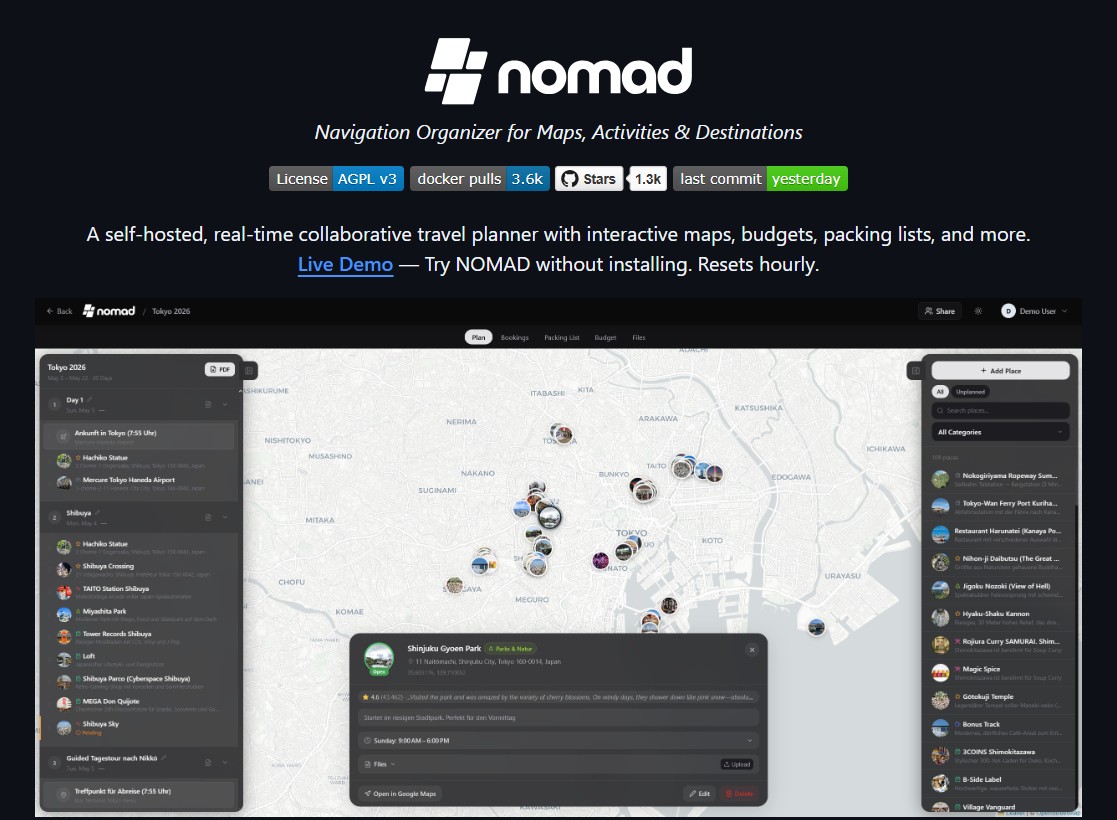
Deployment stays straightforward because Docker Compose handles the local runtime. You mount volumes, start the containers, and keep everything on your hardware. If you want a related example of terminal-first tooling, the Claude HUD dashboard shows the same preference for local control. The DeepWiki article also fits teams that want better context around repository knowledge.
- Clone the NOMAD repository to your machine.
- Review the environment settings and local volume paths.
- Start the stack with Docker Compose.
- Open the app and create your first trip.
The Verdict
NOMAD solves a real problem for teams that want shared planning without SaaS lock-in. The feature set is broad, but the tradeoff is clear. You must accept self-hosting work and community-driven quality. That makes it a strong fit for technical users who value ownership over convenience.
The catch is also the strength. Self-hosting gives you control, but it also makes you responsible for updates, backups, and access policy. If you want more examples of focused open-source tooling, see Taste Skill for cleaner AI workflows. If you want a travel planner with real-time collaboration and local data, NOMAD is worth testing.