Most social media advice is opinion dressed up as strategy. How to hooks, numbered lists, long educational posts, always add a CTA. Creators repeat these patterns because they sound logical, but on Threads in particular, many of them do not match what the data actually shows.
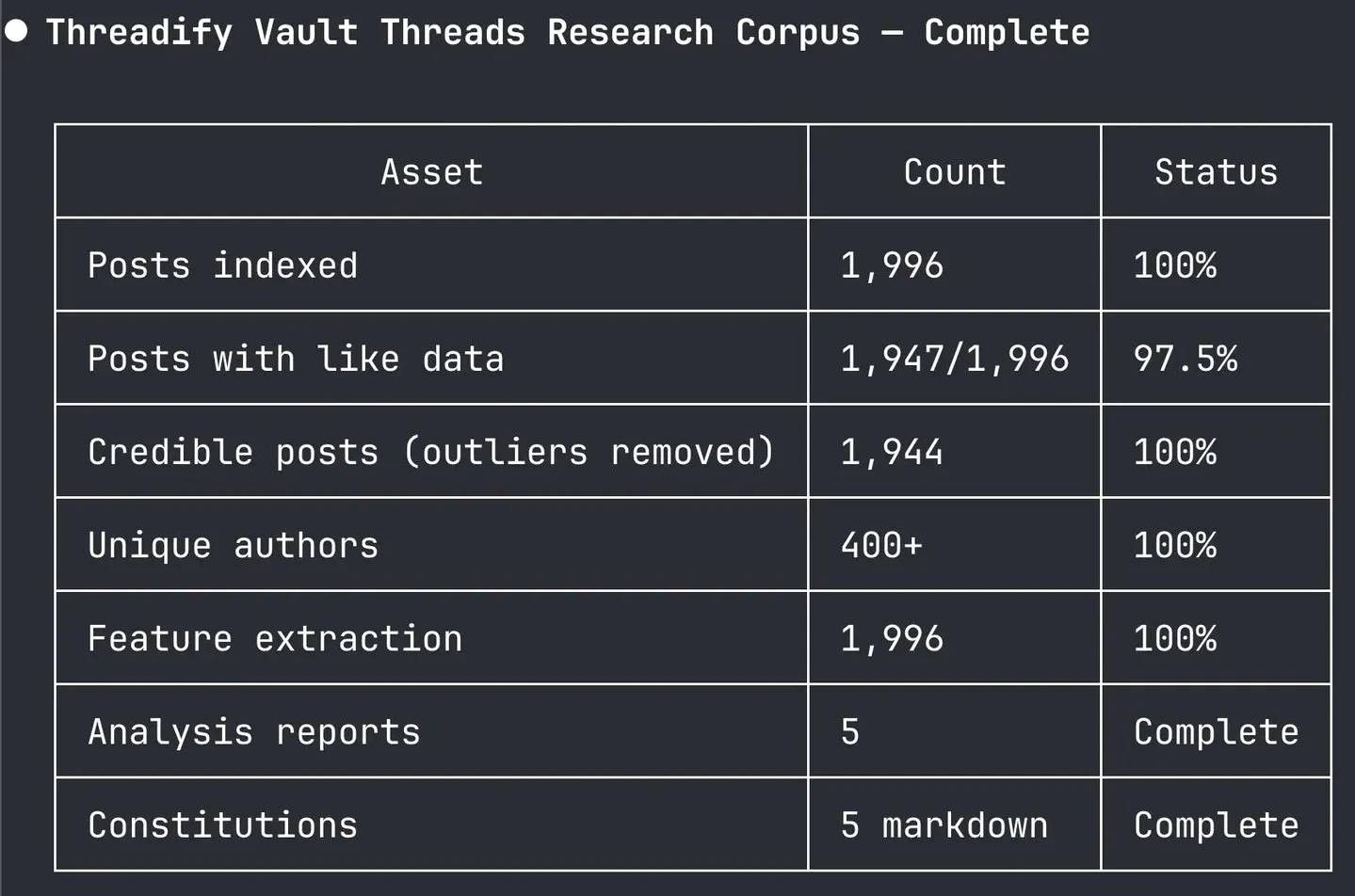
This article is for Threads creators, personal brands, and social media marketers who want to stop guessing, and it solves the problem of low engagement caused by generic posting advice by replacing assumption with evidence drawn from a sample of nearly 1,996 high performing posts.
The core insight is uncomfortable for a lot of creators: the things that feel like good writing are not the things that drive reach. Educational structure, formal tone, and polished formatting often underperform writing that is emotional, raw, and short. The algorithm on Threads, like most modern feeds, rewards interruption, curiosity, and identity, not perfect structure.
What the Data Actually Shows
After analyzing 1,996 high performing Threads posts, the patterns that consistently correlate with stronger engagement are clear, and they contradict a lot of mainstream advice.
- Emotional and confessional hooks outperform instructional openings. Opening with how to almost guarantees lower reach than opening with a feeling, a story, or a vulnerable admission.
- Short form writing beats long essays. Posts that respect the reader’s time and land in under 90 seconds of reading get more engagement than long thoughtful pieces.
- Two part threads outperform long multi post chains. The two post format gives the algorithm two distribution events and the reader a payoff. Long chains usually lose attention by post three.
- Delayed conversion works better than immediate calls to action. Posts that drop the value first and let the CTA come later, or not at all, consistently outperform posts that close with a hard sell.
- Contrarian positioning creates stronger attention spikes. Posts that go against the consensus of a niche earn more replies, more shares, and more profile clicks.
- Long form works only when it feels personal, emotional, or cinematic. Educational long form underperforms. Confessional or narrative long form performs surprisingly well.
The deeper takeaway is that social algorithms reward emotional interruption, curiosity, relatability, tension, and identity signaling. They do not reward perfect educational formatting, and that is the gap most creator advice misses.

How to Use These Findings in Practice
Knowing the patterns is not enough. They have to be applied to the writing process, and the easiest way is to audit your last 10 posts against each rule.
- Audit your hooks. Count how many of your last 10 posts opened with a feeling or confession versus a how to or list. If most are instructional, rewrite the next five as emotional openers and compare reach.
- Shorten by default. Cut every post to half its current length. Keep it if it still hits. If it loses the punch, restore only the parts that carry emotion.
- Default to two part threads. Use a setup post and a payoff post. Stop at two. The third post is usually a distribution tax.
- Remove premature CTAs. Push the ask to the end of the post, the comment, or a later post. Let the value do the work first.
- Write one contrarian post a week. Pick a popular opinion in your niche, take the opposite stance with evidence, and post it. Track the engagement differential.
- Save long form for emotional stories. If you must write long, make it a confession, a turning point, or a cinematic scene. Avoid the lecture format.
The combination of these patterns is what turns Threads from a slot machine into a system. Each rule compounds the others, so the effect shows up strongest in accounts that apply all of them consistently over a month.
What Creators are Saying
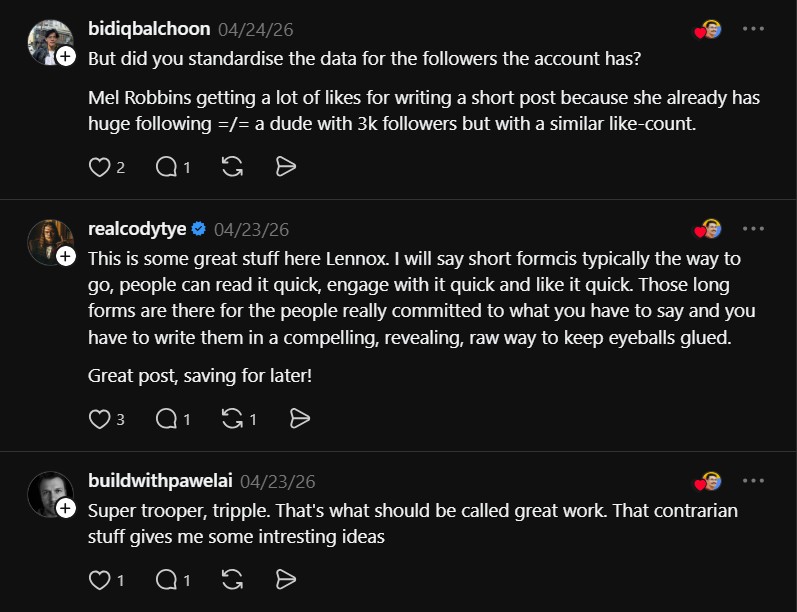
Community reaction to data backed content strategy is usually positive but pointed, because creators are tired of recycled advice and they recognize the difference when they see it.
realcodytye (@realcodytye) said:
“This is some great stuff here Lennox. I will say short form is typically the way to go, people can read it quick, engage with it quick and like it quick. Those long forms are there for the people really committed to what you have to say and you have to write them in a compelling, revealing, raw way to keep eyeballs glued. Great post, saving for later!”
This response is useful because it confirms one of the most counterintuitive findings from the data, that short form is the default, and long form only works when it is written with emotional weight. Most creators have the long form advice backwards.
buildwithpawelai (@buildwithpawelai) said:
“Super trooper, triple. That is what should be called great work. That contrarian stuff gives me some interesting ideas.”
That second comment is the strongest signal of value, because the contrarian framing is the part of the analysis that most creators want to test. When someone reads a data post and immediately starts generating new ideas, the content has done its job. The data is not just informative, it is generative.
Final Take
If your Threads growth has stalled, the problem is probably not your niche, your schedule, or the algorithm being unfair. The problem is that you are writing in formats the platform does not reward. Switch to short, emotional, two part posts, delay your CTAs, and try at least one contrarian take a week. The next 1,996 posts on your account will look very different.