A developer using the handle ChrissGPT posted a demo on X showing Claude Fable 5, running on the high setting, generating a working Minecraft clone in 20 minutes from a single prompt. The prompt was five words.
The output was multiple biomes, a day and night cycle, different ore types, and cave systems, all generated autonomously without any follow up. The creator described himself as stunned, and the demo is now one of the most concrete public benchmarks yet for what Anthropic’s Mythos model line can do on a real software generation task.
This is not a toy project. A Minecraft clone is a non trivial software system. It involves procedural terrain generation, resource distribution, lighting cycles, rendering, and player interaction. That is the kind of project that, until recently, would take a small team weeks to build from scratch. Claude Fable 5 did it from a single one shot prompt in 20 minutes, and the result is genuinely playable.
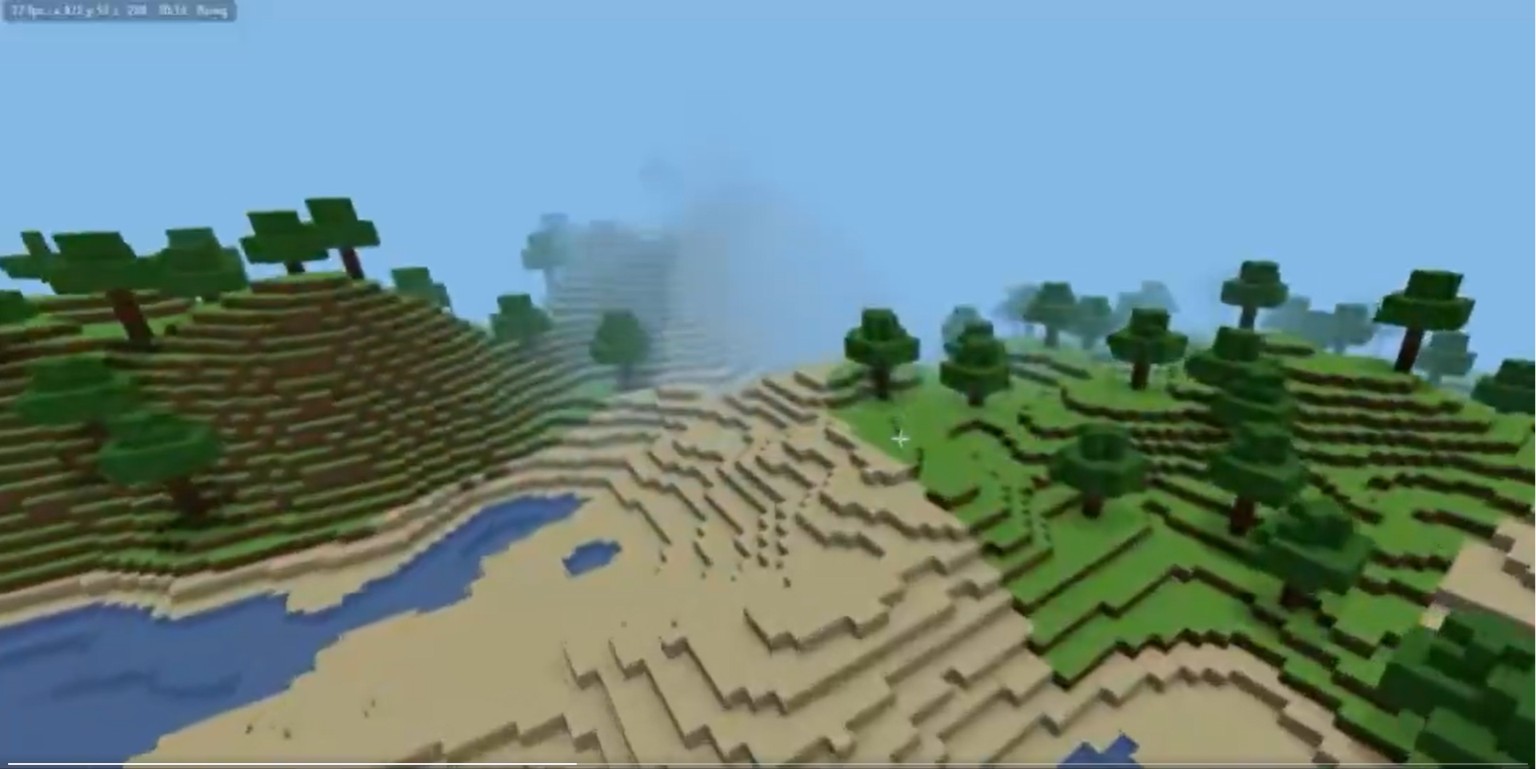
What the Demo Actually Showed
The post on X showed a screen recording of the build process and the final output. The important details are what the clone actually includes.
- Multiple Biomes: The generated world includes distinct biome types, which means the model handled procedural variation across a terrain system rather than producing one homogeneous landscape.
- Day and Night Cycle: A working time of day system with lighting transitions. This is a non trivial state management feature that requires the model to keep time as a variable and adjust rendering accordingly.
- Multiple Ore Types: The world includes different ores distributed across the terrain, which means resource spawning logic was generated as part of the build.
- Cave Systems: Underground cave generation is its own technical problem, and the model handled it. Caves require the system to carve voids into the terrain rather than just placing blocks on top.
- Autonomous Generation: No follow up prompts, no manual code edits, no mid build corrections. The output came from “Make a Minecraft clone” as a single instruction.

Why This is More Than a Minecraft Demo
The Minecraft demo is striking, but the deeper story is what it tells us about where AI software generation is in 2026.
- Single Prompt to Working Software: The gap between idea and working prototype has collapsed. Five words of prompt produced a software system with multiple interconnected systems running at once.
- State Management at Scale: A game world with biomes, time, and resources is a state machine with thousands of variables. Claude Fable 5 generated the architecture for that state machine from scratch.
- Real Time Interaction Is Solved: The clone is playable, which means input handling, camera control, and world updates are all working in real time. This is not static generation. It is interactive software.
- Multi System Coherence: The impressive part is not any single feature. It is that multiple complex systems (terrain, lighting, resources, caves) were generated together as one coherent product without the model losing track of any of them.
That last point is the technical leap. Earlier generation models could produce code that worked in isolation. Claude Fable 5 produced code where multiple complex subsystems work together, and that is a different class of capability.
What People are Saying
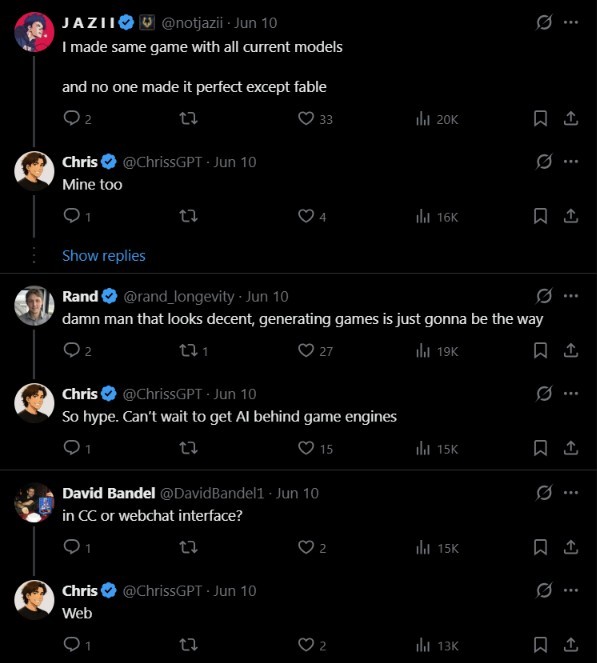
The demo sparked reactions across the AI and developer community, and the response captures the range of what this kind of capability signals.
“damn man that looks decent, generating games is just gonna be the way”
@rand_longevity
“but this is actually insane bro imagine how far we could go in healthcare if anthropic allowed it”
@mikenevermiss
“One thing i’ve truely loved about previous model of claude is its ability to generate live geometry within the interface irrespective of the Dimension either 2D, 3D or higher dimension… But generating mine craft clone seems to be on another level…”
@iyandawaheed1
The first reaction captures the cultural shift. AI generated games are no longer a curiosity. They are becoming the default. The second reaction pushes the implication into adjacent industries, which is where the real disruption will land. The third reaction is the builder perspective, where the model is being evaluated as a creative partner that handles geometry across dimensions.
Why This Matters for Builders and the Broader AI Landscape
For indie developers and small studios, the implication is direct. A single developer with Claude Fable 5 can now prototype a game concept in an afternoon that would have taken a team a quarter. The bottleneck on game development has moved from engineering capacity to concept quality.
For software engineers, the takeaway is that the next layer of developer tools is not autocomplete, and it is not chat. It is a model that takes a description and produces a working application. Claude Fable 5’s Minecraft demo is a public demonstration of that trajectory.
For the broader AI industry, the demo is a benchmark moment. Anthropic shipped a model that can autonomously generate a multi system software project from a one shot prompt, and the result runs. That is a capability bar the rest of the field will be measured against in 2026.
ChrissGPT’s 20 minute Minecraft clone is not the news because of Minecraft. It is the news because of what the model produced. A working software system with biomes, day and night cycles, ores, and caves, generated from a five word prompt, is the cleanest public proof yet that AI has crossed from writing code to building software.
The Mythos model line just set a new bar for single prompt generation, and the games are still the easiest demo. The harder questions are what happens when this same capability lands on enterprise software, healthcare tools, and infrastructure. Those applications are coming. Claude Fable 5 is the proof of capability. The Minecraft demo is just the visible surface.