Finding a real remote job is harder than it looks, especially for people targeting entry level or freelance work without a specialized degree. The most accessible path that consistently pays in 2026 is data annotation and transcription, the work that trains AI models, labels images, rates chatbot responses, and converts audio to text.
This article is for job seekers looking for legitimate remote freelance or entry level online work, and it solves the problem of finding trustworthy platforms, vendors, and networks where you can actually apply for global and local remote jobs.
The catch is that the legitimate opportunities are spread across dozens of small vendors, contract agencies, and direct employer portals, most of which are not advertised on the usual job boards. A curated list of these platforms, vendors, and networks is maintained in a public Google Sheet at:
https://docs.google.com/spreadsheets/d/1TwMTWXoULe6fbTVVBs6At3P4Cd-yohU64m9Igk8Dx9I/edit?gid=0#gid=0
It groups platforms by region, job type, and difficulty so applicants can target the right opportunities without wasting hours on dead links or scam sites.
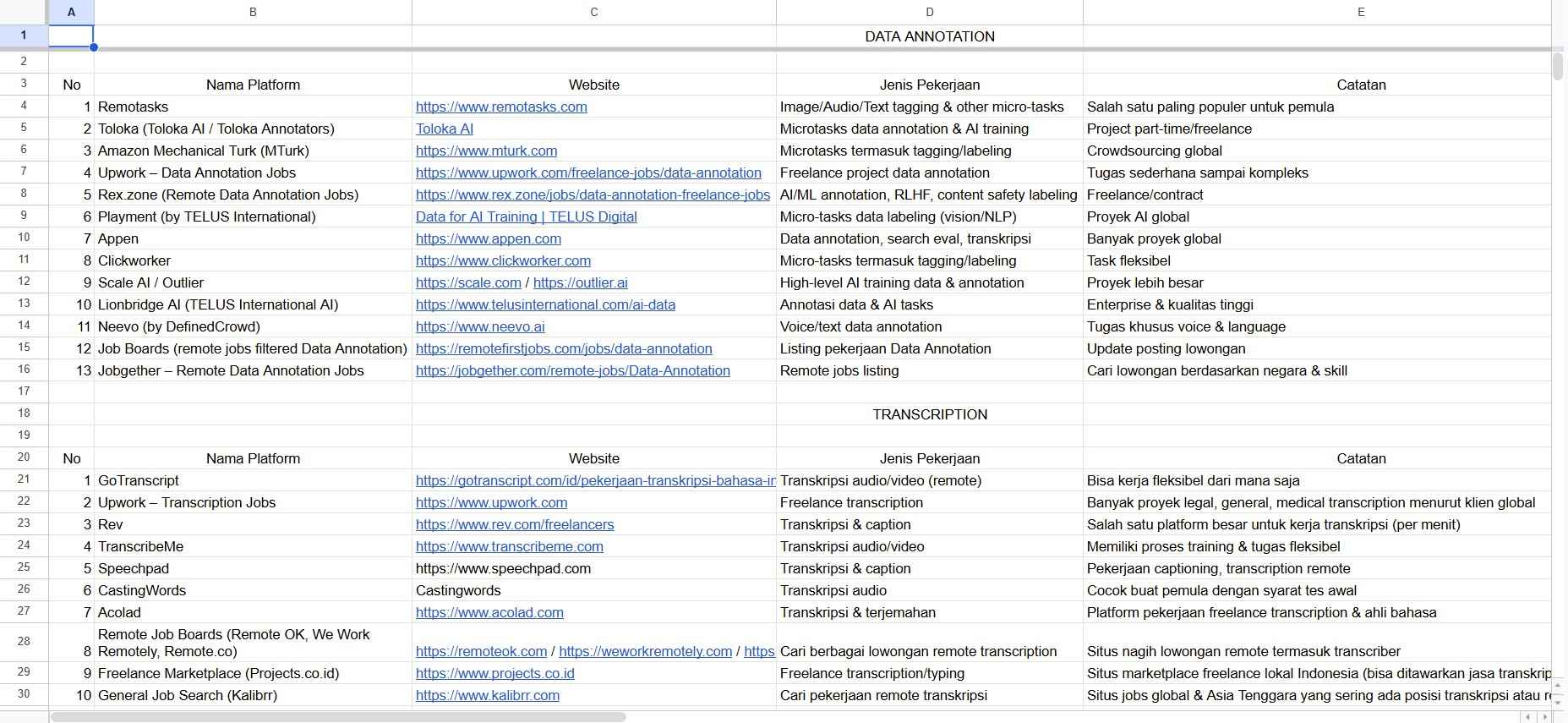
Why Data Annotation and Transcription are Worth Targeting
The AI industry is the single biggest employer of remote microtask labor right now. Every large language model, vision system, and speech recognition pipeline needs human labeled data to improve. That creates a long tail of legitimate, paid, remote friendly work that does not require a resume full of corporate experience.
The work typically includes:
- Text annotation, labeling intent, sentiment, toxicity, or correctness of AI outputs
- Image and video labeling, drawing bounding boxes, tagging objects, rating relevance
- Audio transcription and translation, converting speech to text in many languages
- Search relevance evaluation, judging which results are best for a query
- Code review and code generation feedback, used to train coding models
Most platforms pay per task, per hour, or per milestone, and the barrier to entry is usually an English test, a short skills quiz, and a clean internet connection. Beginners can start within a week.

What Kind of Works is Available Remotely
The remote data work market splits roughly into three categories:
- Global Platforms: Large vendors like Remotasks, Scale AI, Appen, and Toloka. They accept workers from many countries and offer steady task flow once you pass onboarding.
- Specialized Vendors: Smaller agencies focused on transcription, translation, or niche annotation. They often pay better per task and accept beginners more readily.
- Direct Employer Networks: AI startups and research labs that hire contractors directly through their own portals. Better pay, more selective, often project based.
For beginners, the global platforms are the easiest entry point. For people who already type fast or have language skills, the specialized vendors and direct networks usually pay 30 to 100 percent more.
How to Apply without Getting Scammed
Three rules save a lot of time:
- Never pay to apply. Legitimate platforms do not charge application fees.
- Verify the platform domain. Imposter sites copy real platforms. Always apply through the official URL, not through random Telegram or WhatsApp job offers.
- Start with a small workload. Test the platform on a few tasks before committing significant hours, then scale once payments are confirmed.
The Google Sheet linked above filters out most of the noise by listing only platforms that have a public reputation, a real payment track record, and a working application path. It is a good starting point for anyone serious about this category of work.
What Remote Workers are Saying

Community reaction to a clean, vetted list like this is usually one of relief, because most job seekers have already wasted time on scam listings and ghost vendors.
punyasibungsu_ (@punyasibungsu_) said:
“I hope your fortune will be smoother and flow more smoothly. Very good, thank you very much.”
That kind of response usually comes from someone who has been searching for a while. When a list saves hours of filtering, the appreciation is real, and it signals that the resource is hitting a genuine unmet need.
Final Take
If you are looking for legitimate remote work in 2026 and you do not yet have a specialized degree, data annotation and transcription are still the most realistic entry point. The platforms are real, the work is paid, and the path from application to first task can be as short as a few days. Use the curated list, skip the scams, and start small. Consistency on one platform beats scattered applications across twenty.