
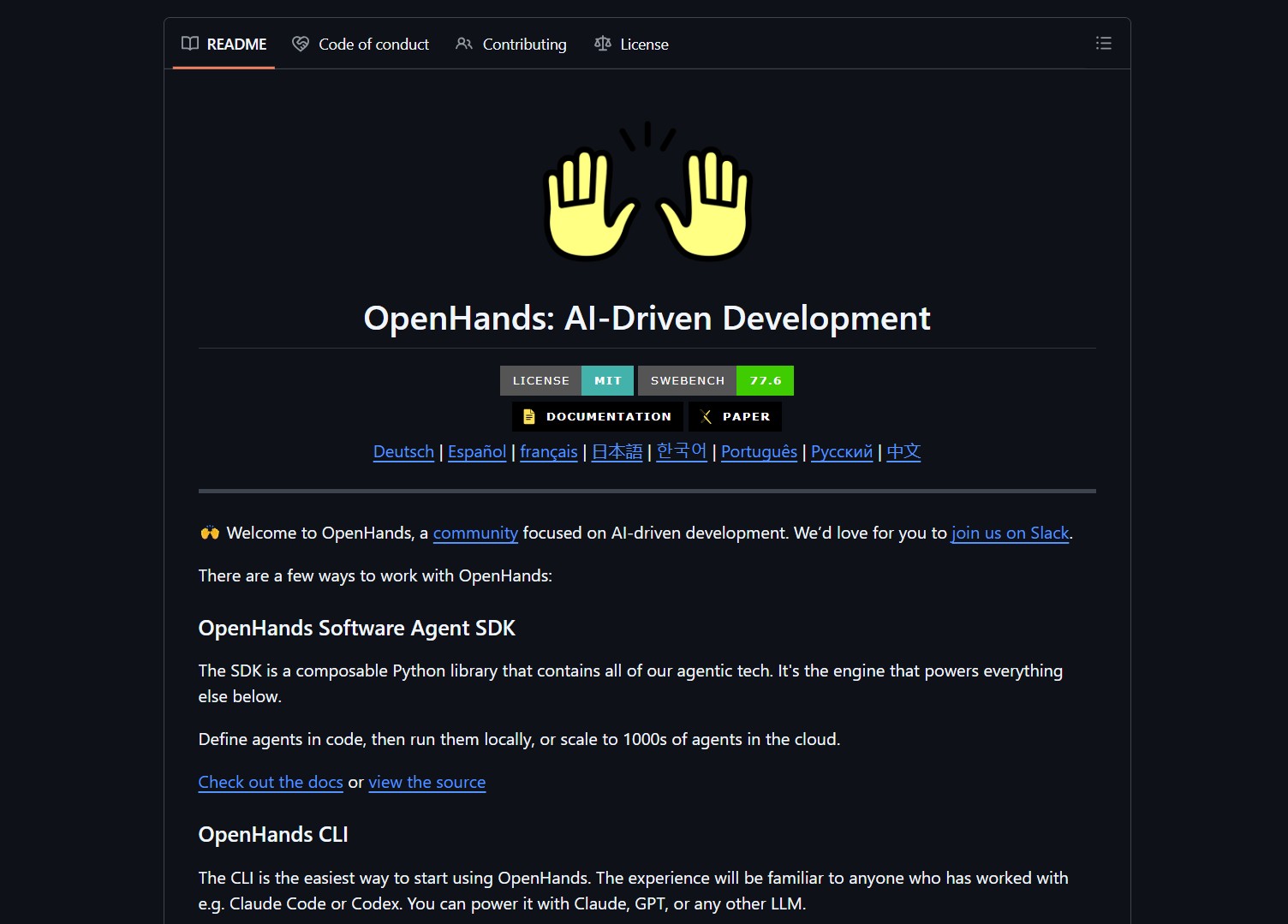
OpenHands is a community-driven development platform for building and scaling AI agents. It provides a unified ecosystem that includes a Python SDK, a CLI, and a local web interface. This system allows developers to create autonomous agents that can handle complex software engineering tasks. Users can start with local prototyping and transition to large-scale cloud deployments using the same codebase.
Key Features and Capabilities
The platform offers a composable Python SDK for defining custom agent behaviors and capabilities. It includes a built-in code editor, terminal, and browser for agents to interact with their environment. The system supports various large language models through integration with Ollama and OpenAI-compatible APIs. It achieves high scores on software engineering benchmarks by solving real-world GitHub issues autonomously.
Who Should Use This Platform
This platform is for software engineers who need to automate repetitive coding tasks and bug fixes. It serves DevOps teams looking to integrate AI agents into their CI/CD pipelines. Startups use the cloud version to collaborate on agent-driven development with shared infrastructure. Enterprise users benefit from self-hosted deployments that comply with strict security and privacy requirements.
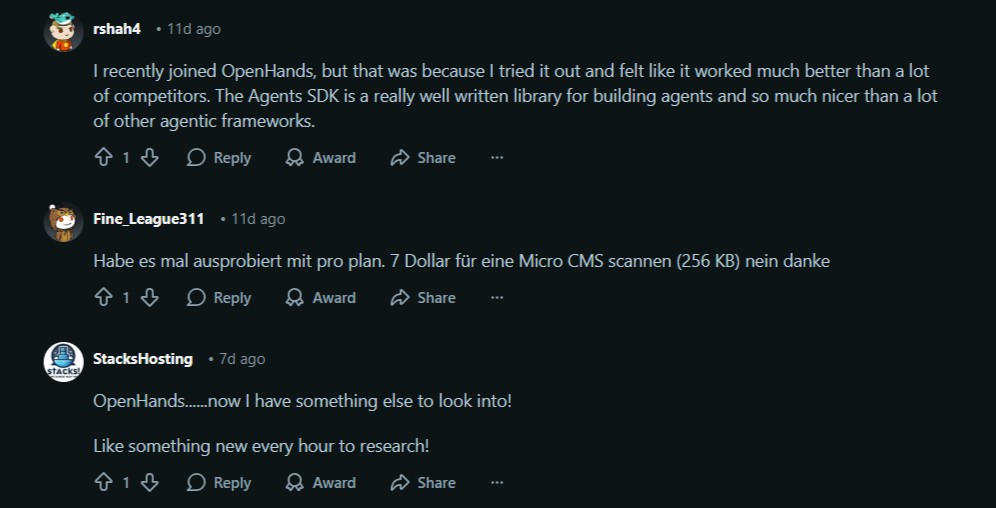
Developers can use this system to build personal AI agents for local workstation automation. This approach eliminates the need for expensive third-party tools while maintaining full control over the execution environment.
Project link:
https://github.com/OpenHands/OpenHands
Deployment and Integration
To begin, you can install the SDK using pip install openhands in your environment. The CLI tool is available via a simple shell command for quick prototyping. For a visual experience, the local GUI runs in a Docker container with access to your local files. Teams can connect the platform to Slack or Jira to manage agent tasks through messaging apps.
Market Context and Analysis
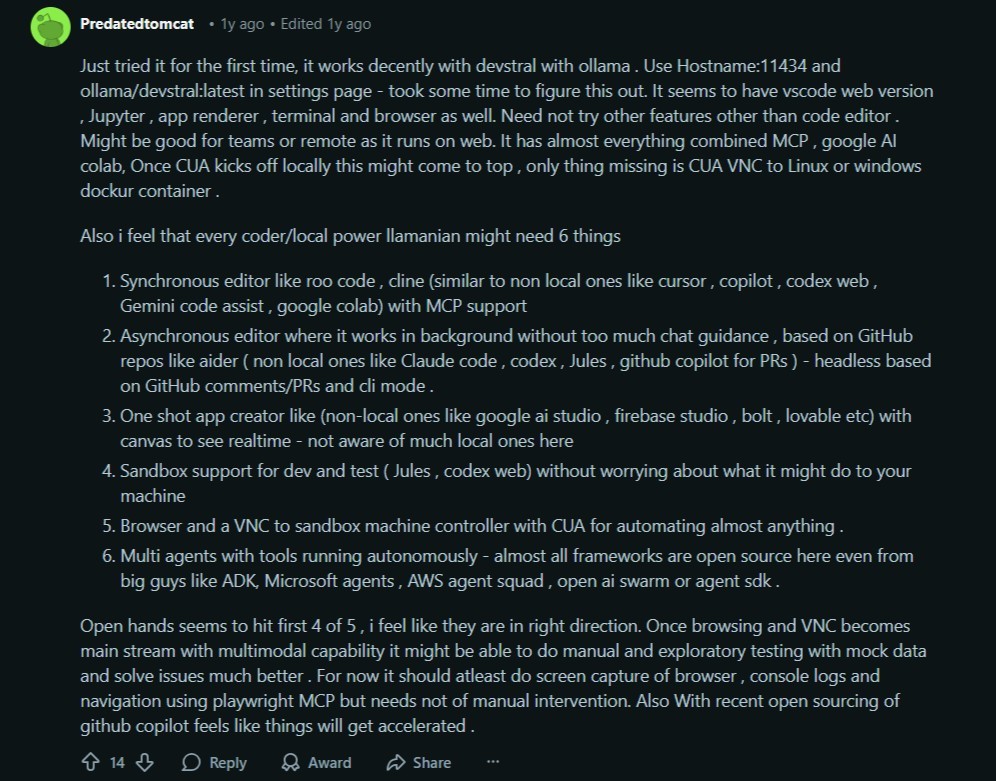
The agentic development market is shifting toward unified platforms that bridge local and cloud environments. OpenHands competes with proprietary solutions by offering a source-available alternative with no vendor lock-in. Its popularity among engineers at major tech companies indicates a strong demand for open-source AI tools. This trend suggests that agent-first AI IDEs will become standard in modern software engineering.
Our library contains more guides on automating your development workflow with the latest AI tools. Explore our tutorials on self-hosting AI interfaces and optimizing model performance for local hardware. Stay updated with the latest open-source developments by following our deep dives.
The Verdict
OpenHands is a mature platform that simplifies the creation of autonomous software engineering agents. It effectively combines ease of use with the scalability required for professional deployments. While it requires a solid understanding of Python for deep customization, the CLI and GUI make it accessible to most developers. It is a reliable choice for teams moving beyond simple chat interfaces to full agentic automation.
- How to Build an MVP in 3 Hours with Vibe Coding Prompts
Badge Vibe Coding Prompt Template provides structured, copy-paste prompt templates that guide an idea through market research, a PRD, implementation..
- How to Build Safer Agents with Parlant Conversation Modeling
Badge Parlant promises to stop the “roll of the dice” approach by enforcing contextual guidelines that activate based on conversation..
- How to Build Interactive UIs for Agents with MCP Apps
Badge MCP Apps is an extension proposal, SEP-1865, that aims to standardize interactive user interfaces inside MCP hosts. The effort..
- How to Build AI Apps with Genkit and Firebase Studio
Badge Genkit is the open-source framework that powers Firebase Studio, and it provides SDKs for JS/TS, Go, and an alpha..
- How to Build a Local Multi-Agent Workforce with Eigent
Badge I ran into this project while evaluating desktop-first agent platforms that coordinate many workers in parallel. Eigent is a..
- How to Build RAG Apps with BRAG LangChain Notebooks
BRAG LangChain provides five notebooks that walk from basic RAG setups to advanced multi-query, routing, indexing, and reranking techniques. This..